

Along the stretch of the Middle Rio Grande where I frequently walk, birdsong is scarce this spring, even in the early mornings. Already, more than 40 miles of the Middle Rio Grande are dry. Reservoirs are low, irrigation season will end early, and a handful of small fires have already burned in the bosque.
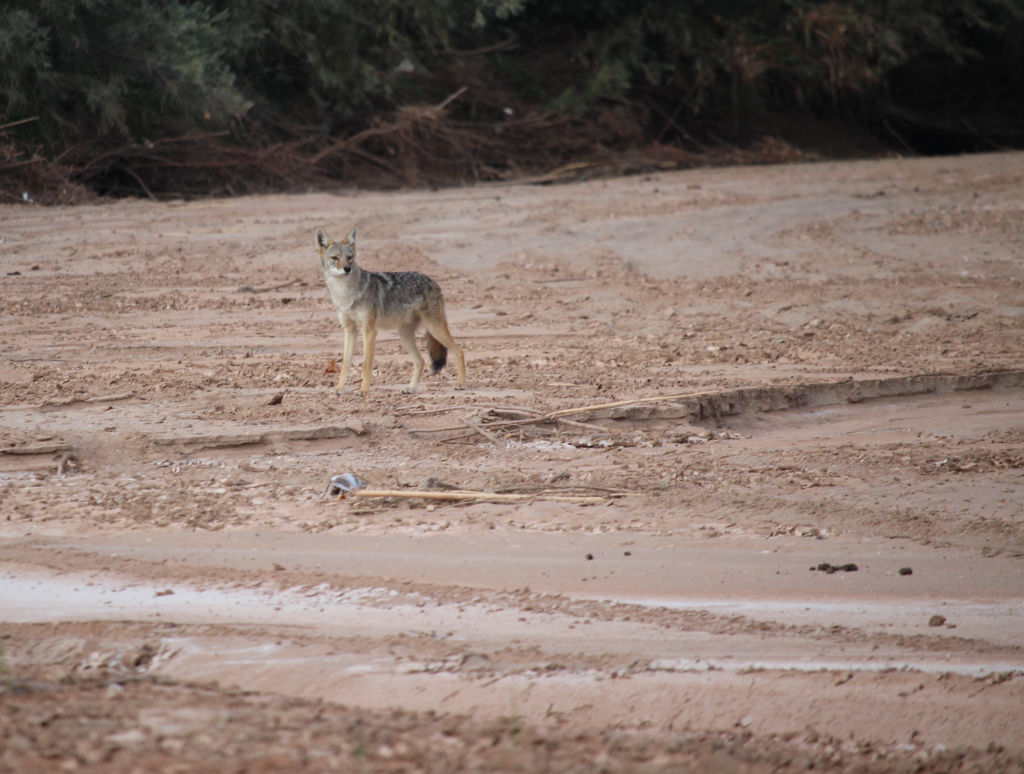
Soon, when river drying moves upstream into Albuquerque, I’ll witness how the fish, turtles, beavers, coyotes, porcupines, javelina, and other wildlife suffer. Insects, bats, and other pollinators will be affected. The cottonwoods that dropped leaves when their roots couldn’t reach water last summer — yet still tried leafing out this spring — won’t survive another hot, dry year. And I have a hard time thinking about what will happen in September and October when the sandhill cranes start arriving.
Of course, it’s comforting to tell ourselves that there will be good years and bad years. Or to hope for a decent monsoon or more snow next winter.
Along the stretch of the Middle Rio Grande where I frequently walk, birdsong is scarce this spring, even in the early mornings. Already, more than 40 miles of the Middle Rio Grande are dry.
But as the Earth keeps warming and the Southwest becomes increasingly arid, the bad years hit more frequently — and much, much harder. Especially when forests and rangelands and orchards are dusty and dry all four seasons and into the next water year.
And every year the Middle Rio Grande (or any once-perennial river) dries, we lose our resilience and our ability to listen — to the river and to one another.
I first started reporting on drying in the Middle Rio Grande 24 years ago this spring. At that time, officials tried to hide the fact. Other people blamed it on “drought.” Today, we all know why the Rio Grande dries: There’s less water in the system. There are too many demands. And in states like New Mexico, rivers lack rights to their own waters.
For more than 100 years, too many of us have treated New Mexico’s rivers like ditches, pipelines, and perpetual machines engineered to serve our wants and needs. Too few of us remember that rivers have power, desire, and needs of their own. And our rivers have a lot to say — including this spring when almost all of them are extremely low.
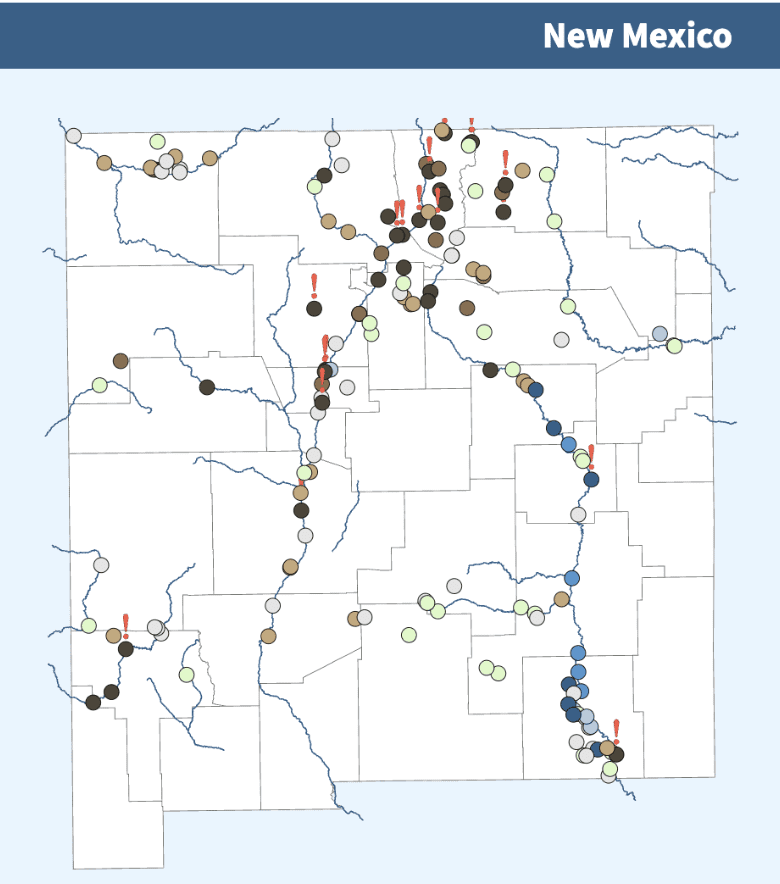
FIGURE – New Mexico water conditions from 153 USGS monitoring stations. Downloaded on April 28, 2026.
Scientists have been warning about warming, aridification, and increased water challenges for decades. And New Mexicans everywhere see the impacts of climate change in heat- and drought-stressed forests, dry riverbeds, burning landscapes, dust storms, heat waves, and bare mountaintops. Even if a so-called Super El Niño brings rains to New Mexico this summer, it won’t solve our long-term water challenges. Indeed, it will likely lay bare our vulnerabilities to extreme rains and flooding — and not just in places recently ravaged by wildfires.
In this moment, each of us must listen and witness. We must choose to take care of one another. And in these dangerous and challenging times, we must talk about how to better protect tribal water rights, sustainable agriculture, communities — and our rivers, streams, and wetlands.
During times like these, when people worry about their own water, competition and hardship weaken our ability to cooperate or care for another — let alone the more-than-human world.
But neglecting or harming our rivers and the species we share this Earth with doesn’t make us safer or stronger. It makes us weaker and far, far lonelier in the long run.
In this moment, each of us must listen and witness. We must choose to take care of one another. And in these dangerous and challenging times, we must talk about how to better protect tribal water rights, sustainable agriculture, communities — and our rivers, streams, and wetlands.
It’s easy to be overwhelmed by global and national events, while ignoring the influence we have in our own neighborhoods and communities. For example, how many of us called or wrote state legislators earlier this year, urging them to fund state agencies, protect rivers, address climate change, and take the state’s water challenges and inequities seriously?
With that in mind, there are steps anyone can take in this moment — to dispel despair and inaction. And to take part in a future that’s better for all of the state’s waters.
- Visit (or recall) a beloved water body. Imagine a sustainable future for the river, stream, or wetland you love. Listen to what water is telling you.
- Share your story and write to elected officials about how they can better protect the state’s waters. Explain why water is precious and meaningful to you and your community. Remember to hold elected officials accountable. Especially those you voted for or supported during election season.
- Have an intimate conversation about what New Mexico’s rivers need and deserve with at least one other friend, neighbor, or family member. It’s okay to disagree. But keep talking.
In these dangerous and challenging times, it’s up to us to be brave, with love in our hearts, and listen to what water is telling us. Indeed, there is no real other way forward.
May 5, 2026 @ 10:39 am
The beaver lodge is royal:
logs silvered to bone,
ceilings of blue water
or clear ice.
The aspen encircling
yellow purple pools
and then snow’s deep silence
covers peace.