

Everyone seems to agree that New Mexico has problems — poverty, unemployment, education, healthcare, childcare, crime rates, etc.
Political candidates and current office holders talk endlessly about these. Each claims to have a solution.
However, those politicians inadequately address the invisible Elephant in the room. That Elephant is the growing scarcity of water across the state, and He is huge.
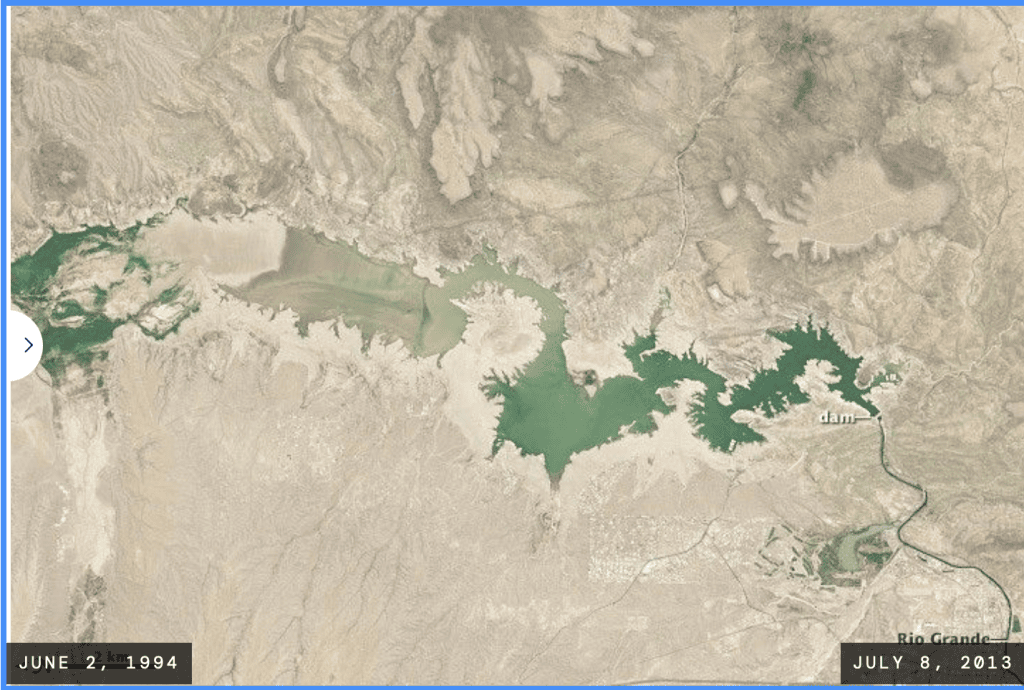
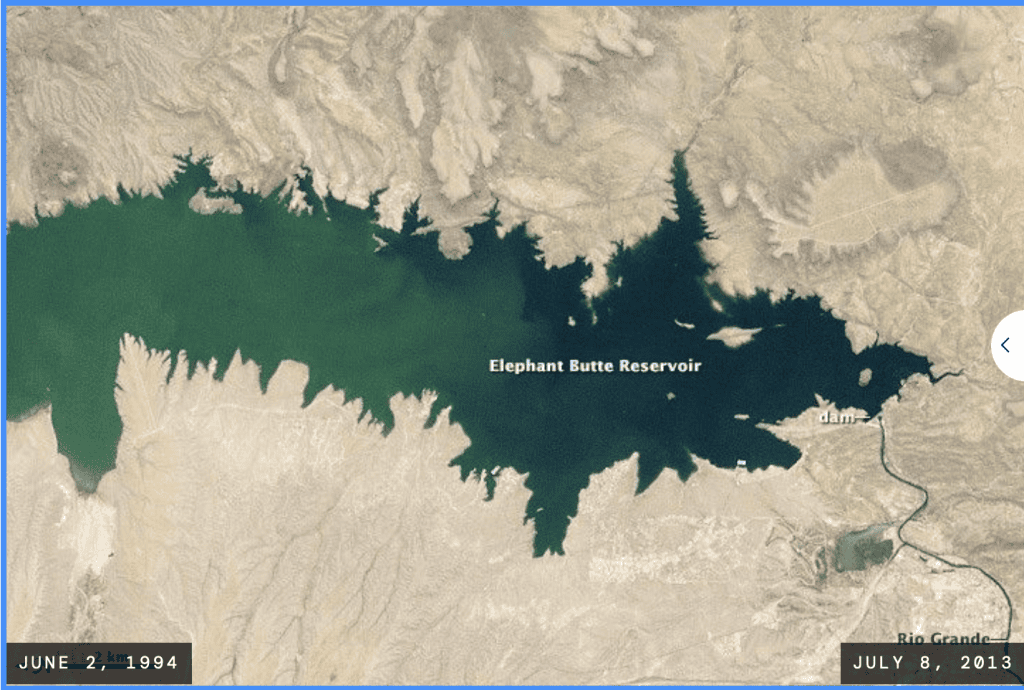
Depending upon where you live, water scarcity shows itself in different ways and with different urgencies. Examples:
- In the Clovis area, you know that the Ogallala aquifer is running very low (in part from Texas’ minimal groundwater regulations). The Ute pipeline, several years away, may help but is certainly not a permanent solution.
- In the rapidly expanding Rio Rancho area, you are dependent upon recycled or reused water, but, more, upon groundwater pumped from an aquifer that is minimally recharged.
- In the Lower Rio Grande valley (south of Elephant Butte to the Texas state line) you are legally subject to a recent US Supreme Court decree. That Rio Grande Compact lawsuit took 13 years and cost the state well over $100 million to litigate – and lose. The decree requires the region to use significantly less groundwater annually, enough less to fill a football field to a depth of 3½ miles.
- In Las Vegas, you are already in Stage II drought restrictions and are subject to regularly increasing rates of river evaporation.
- In the Albuquerque East Mountains and Estancia Basin, you’re dependent on a groundwater aquifer that is regularly being drawn down with minimal recharge.
- In the northwest corner of New Mexico, you are subject to regulations and restrictions based on the annually diminishing flows in the Colorado River.
- In the Placitas Village, your available domestic and irrigation water is dependent each year on the previous winter’s Sandia snowpack. And snowpacks have been regularly diminishing.
- In the Middle Rio Grande (Los Alamos highway bridge to Elephant Butte), your area is racing toward another Compact violation, yielding another Texas lawsuit because of regular overuse and under-delivery of water.
A few politicians have suggested that we could solve our water problems by obtaining “new” water. They variously cite purified “produced” water from oil and gas wells, desalinated brackish groundwater, and imported water pumped into the state from elsewhere. Each of these suggestions carries some serious baggage:
- Purifying produced water is extremely expensive and can leave unknown substances in the water.
- Mining treatable brackish water is limited in quantity, and the energy intensive process of desalination creates substantial waste products needing safe disposal.
- Imported water requires finding a willing exporter/seller, as well as substantial piping and delivery costs.
However, all is not yet lost. The 2023 New Mexico Water Security Planning Act (72-14A NMSA) provides an opportunity for each region in the state to understand the specifics of its regional water situation, to identify the values important to the region, and to design a negotiated plan with policies and projects that, when implemented, would make for improved water longevity or sustainability.
Fulfilling that Act, of course, would require the politicians in Santa Fe to acknowledge the enormity of the Elephant, the severity of the problems, and provide funds needed for the regions to conduct their planning. While planning is hard and often contentious, failing to do so mortgages our future.
The future of New Mexico depends upon water. For New Mexico’s economic future, please coax your legislator to fund the state agencies to do the jobs and implement the laws the Legislature has assigned them.
July 20, 2026 @ 11:31 am
Regarding the Lower Rio Grande, the Decree entered in TX v. NM was reached through settlement, not litigation. NM did not “lose” the case, it agreed to a settlement that completely affirmed its litigation position. NM’s litigation position was that NM’s baseline for groundwater pumping under the Rio Grande Compact grandfathered in groundwater pumping levels occurring from 1951 through 1978 (the “D2 Period”). The litigation position of Texas and the United States was that the Compact required NM to be limited to groundwater pumping levels occurring in 1938. The new Decree establishes NM’s right, under the Rio Grande Compact, to use and deplete water in accordance with the D2 period. That was a win, not a loss. NM was also successful in showing that current levels of depletion (in excess of the D2 Period) were not a result of increased irrigation uses, but post-1978 groundwater pumping by municipalities and commercial users – DCMI users. While the LRG valley grows higher water-use crops than historically, they are being grown on less acreage and irrigation water consumption has remained consistent with the D2 Period. Under the settlement, NM agreed to reduce post-78 deletions caused by DCMI users which will require a significant amount of irrigated acreage to be permanently fallowed. The settlements reached in TX v. NM will require that all water users in the LRG work together to find creative solutions for sharing shortages and ensuring long-term sustainability of the aquifers they rely on. Inaccurate reporting fuels divisiveness. I hope NM Water Advocates will utilize their voices to do more than sound alarms, axe-grind, and paint invisible elephants.
July 19, 2026 @ 7:38 pm
I couldn’t agree more. It is a sad, dire situation.
July 16, 2026 @ 1:52 pm
We have lived in Las Cruces for 39 years and raised our family here. We are seriously considering leaving our beautiful home and leaving the state that we love, because we worry about lack of fresh water. We have seen the water table lower so much that all the beautiful Cottonwoods that we loved are dead and or dying. The only thing growing are endless pecan trees, getting lots of water and sucking the earth of its moisture. There are hardly any chile fields left in this valley that made green chile known across the country. And now we have the biggest threat, a data center. First the atom bomb, uranium mining and poisoning, then pecan trees, and now data centers. It will bring death to this beauriful state, mountains and lands.