

We are all feeling the drain of the heat and the searing thirst. It’s been too hot, for too long. Daily we look to the sky to see if those predicted monsoons will maybe, just maybe, finally arrive. And then each afternoon passes with clouds on the horizon but little to no rainfall. The fields are brown, and crispy, and the trees are dropping their leaves as if autumn has already arrived despite temps still being in the high 90s. Even the lows are way too warm. The Rio Grande has been dry through the Albuquerque stretch and except for the brief water release last weekend, it is a highway of sand and sticker bushes.
The real evidence of the water crisis though can be seen through the behavior of the wild animals. They are more desperate than we are and their struggle to survive is bringing them out of the bosque and out of the forests. I heard recently that one of the non-hydrologic indices of extreme drought is increased bear-human interaction. And boy does that feel true, not just bear encounters but wildlife of all kinds.
I have seen a skinny bear on the Faulty trail four different times this summer. Thankfully it is shy and un-interested in me, but why is it staying so close to the trail and will it survive this winter with it being so skinny at the end of summer? Some mountain bike riders I know came across a dead bear in the Jemez, and seeing the pictures broke my heart. I’ve seen several dead racoons down by the river. There are too many for it to feel like the normal course of nature. The living wildlife that I see are in obvious distress.
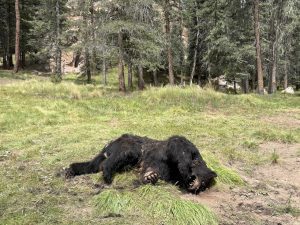 Photo by Susan Montoya Bryan
There are so many skunks and racoons just wandering the neighborhood in the evenings and they look very small compared to most years. The coyotes are getting desperate and leaving the bosque in search of water and food. There is a small contingency of six feral cats that my neighbors feed and three have gone missing in the last two weeks. We assume they fell prey to the coyotes that are now frequent visitors to our neighborhood.
Click here to hear the coyotes
Additionally, my neighbors found a foot-long snapping turtle on 12th street adjacent to the Griego acequia culvert. I must assume that glorious prehistoric looking thing lived in the culvert and had to leave to try to find water. He is now with the wildlife rescue at the nature center. The same morning my neighbor took the snapping turtle to the rescue, she also found an injured hummingbird.
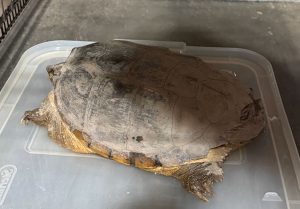 Photo by Courtney Strang
There is a porcupine that comes to visit my little stock tank pond every night at about 2:00 AM and when the river was wet this week, there was a porcupine out in the damp riverbed. I wanted to feel hopeful about it, but I know that the tiny bit of water that was there will be long gone by the end of this week.
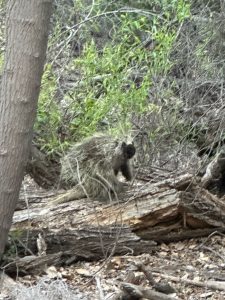
All of these animals are just seeking water and food, and the search is becoming harder each day. They are parched. We are parched. The land is parched.
As readers of the New Mexico Water Advocates newsletter, I know you can all see the writing on the wall. I know you see the brown crispy fields and the dire circumstances that the animals are contending with, I know, that you know, that this is not just a bad year. It’s one of many bad years in a row and frankly, this is our new normal.
So, what can we do? In the long term we can band together to demand funding for our water agencies from the legislature, we can demand that the new Governor make water management a top priority of their tenure in office. We can demand that costly schemes for magically producing more water supply be put by the wayside and the money be used instead for actual data collection (like the aquifer mapping project) and smart water management plans (like the 2023 water planning security act). We must keep talking to our neighbors and friends. With education and active water management we can all get through this, and there can even be enough water for the river and the animals. In the short term, you can send us a paragraph telling us about your experience with the drought and aridification. Or send us photos of animals you’ve seen out seeking a place to quench their thirst. And while you’re at it, maybe put out a saucer of water in the corner of your yard. You never know might come for a visit.
September 16, 2026 @ 9:17 am
Thank you for your thoughtful article.