

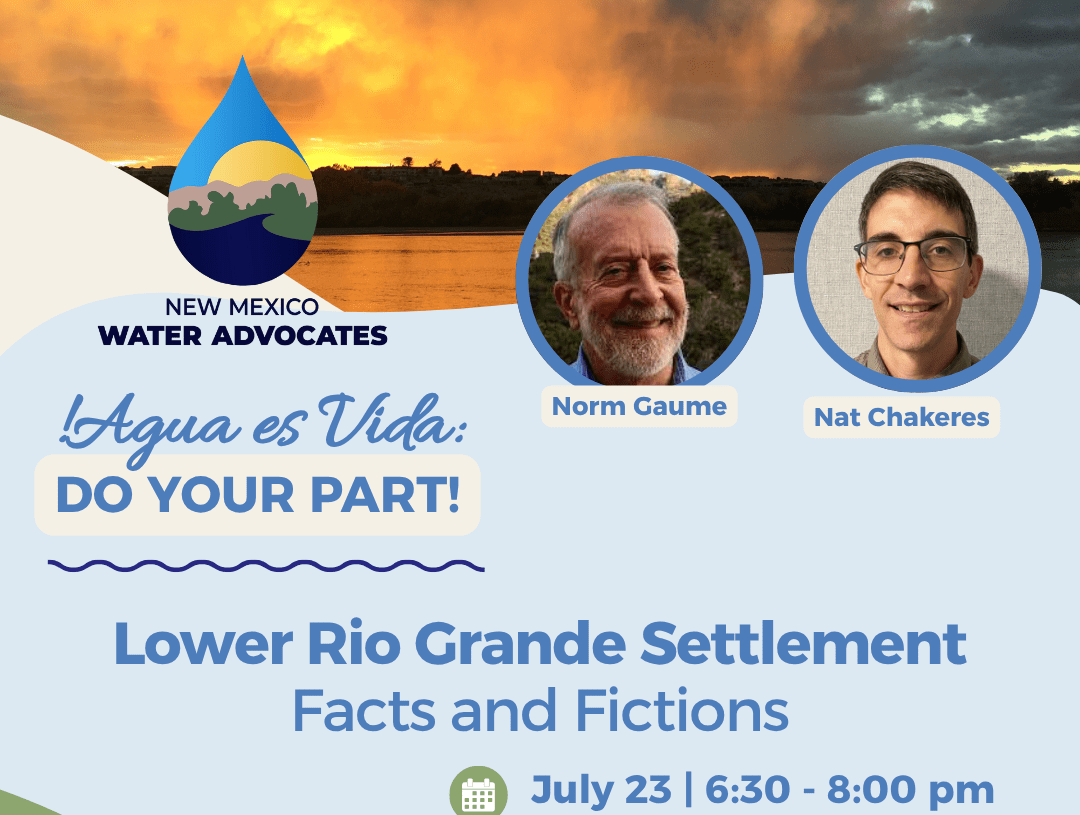
The U.S. Supreme Court’s May 2026 approval of the Rio Grande Compact settlement ended an era of cheap, apparently unlimited water in southern New Mexico. Every water user from Elephant Butte Dam to Sunland Park — farmer, city, business, homeowner — faces unwelcome constraints, costs, and uncertainty. New Mexico’s obligations to deliver Texas’s share of Caballo Dam releases at El Paso are specific, clear, and backed by severe penalties. How New Mexico meets those obligations — and who bears the burden — remains unresolved. Before the settlement was finalized, the City of Las Cruces, New Mexico State University, and others filed amici briefs asking approval be withheld until negotiations secured a reliable water supply for the region’s people, institutions, and non-agricultural economy. Those negotiations are ongoing; their outcome is uncertain. No one knows what will be required to allocate a sufficient supply — the foundation of public health, safety, and welfare in the region — when water is insufficient to satisfy EBID farmers’ senior rights, as it is this year and last. Nat Chakares, General Counsel of the New Mexico Office of the State Engineer and a key participant in the litigation and settlement negotiations, will offer his insider’s perspective. Norm Gaume, former director of the New Mexico Interstate Stream Commission and President of New Mexico Water Advocates, will present his independent conclusions regarding the settlement’s consequences for non-agricultural water uses and users in the Lower Rio Grande. Both presenters agree: repeating this path in the Middle Rio Grande — a plain violation of New Mexico’s compact delivery obligations bringing protracted interstate litigation ending in a U.S. Supreme Court decree — must be prevented. Join us to learn why.


A rare super El Niño is spreading across the Pacific, and it may bring New Mexico a brief reprieve from years of deepening drought. But forecasters warn that one or two wet seasons won't erase long-term water deficits — and climate warming means the Southwest's aridification is far from over.