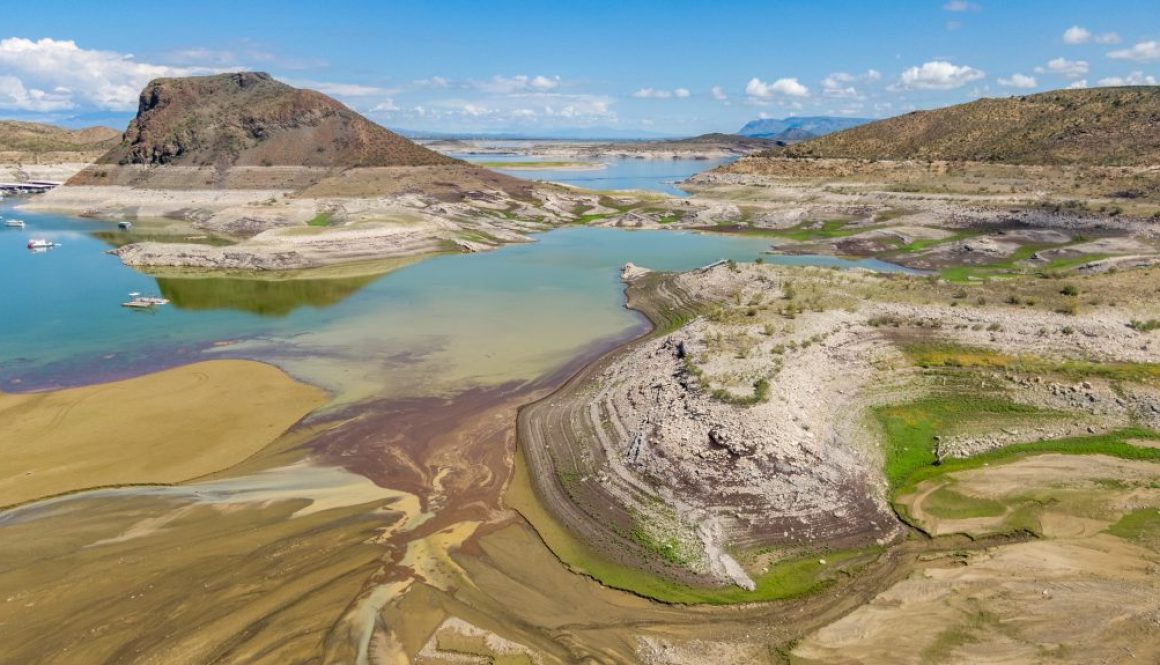
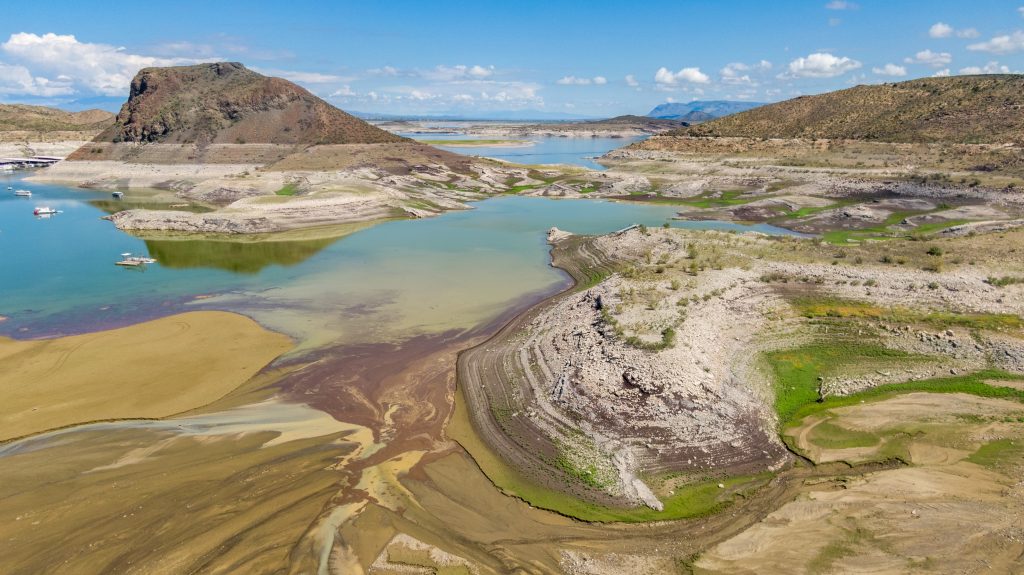
New Mexico’s Growing Water Supply Crisis
New Mexico faces a growing water crisis, driven by climate change and overuse. Without swift action, water shortages could threaten our economy and way of life. Experts forecast that, within 50 years, our state will be 5-7 degrees hotter, with 25% less water.
Can those living in New Mexico successful save our existing and growing economies from some sort of future catastrophic collapses due to water supply shortages caused by climate change? Most do hope so, but action is needed very soon. It does not seem, however, that it is human nature to address pending crises before they become severe. For example, our state and local governments and communities are failing to address rapidly the present and ongoing realities of water supply overuse along the Rio Grande and elsewhere across New Mexico.
Cities and towns along the Rio Grande see almost daily new developments, apartment complexes, housing communities, office buildings, and so on being constructed. This would seem to be in response to the significant ongoing efforts by the local governmental development agencies to attract new industries and business to the New Mexico, especially to the Albuquerque area. While we have sometimes heard, “If we are not growing, we are shrinking,” we also have heard, “The bigger they are, the harder they fall.” Not an outcome most would desire.
Current State and Local Efforts: Are They Enough?
Yes, our state’s Interstate Stream Commission and Office of the State Engineer are grinding away slowly in a start to address the state’s present and pending water supply crises, an effort that some may call “too little, too late.” Many reports have been produced and necessary actions are being talked about. It will take years to establish and implement the need actions, perhaps too slow and too late for the magnitude of changes coming regardless of whether we act or not. But it is important to acknowledge that these efforts by our state’s agencies are severely constrained by major limitations caused the failure to the NM legislation to recognize the severity of the growing water supply crises and their failing to provide needed funding to rapidly produce needed management changes. So, will a better late than never water management update be adequate? Time will tell.
How Did We Get Here? The Prior Appropriation Doctrine
How did we get here? States west of the 100th meridian, including NM, generally have long managed surface water supplies, especially along rivers, using the prior appropriation doctrine. This gives to whoever first started depleting surface water for “beneficial uses” the right to divert the same defined volumes of surface water from that source for ever. Historically, this meant diverting surface water for agricultural uses, as water for domestic or other uses tended to be relatively minimal, even insignificant, in comparison. This system is also sometimes called, “first in right, first in use.”
A water right is the right to use water, not the right to own water. Under the NM Constitution (Article 16), all water in NM belongs to the public, that is, the State, and is subject to appropriation by beneficial use. Those with the most senior water rights include native tribes, pueblos, Spanish land grants, and other territorial water users established prior to the 1907 Water Code. Senior water rights users can continue to use the permitted quantity of water annually for their beneficial uses into the undefined future, if the water source can supply that quantity. Successive users who then have more junior water rights can take any remaining surface water from that source for their own beneficial use, but only so long that they do not impinge on the rights of the more senior users. At least that that is the way it was supposed to work.
The Reality of Over-Appropriation and Overuse
How well does it work? It seems, less than optimally. According to a report from the Western Water Network, in the 1880s the Rio Grande water “was fully appropriated for irrigation.” Then the 1889 drought cycle “aggravated problems of over appropriation [emphasis added] in the Upper Rio Grande.” In that report “Upper Rio Grande” means the river upstream from just south of El Paso, Texas, to the river’s headwaters in Colorado. Consider then with over appropriation, that is “overuse,” of the Upper Rio Grande occurring in 1889, how is use of the Rio Grande water not considerably stretched thinner today? Consider this now especially when facing the region’s diminishing annual water supply and warming.
Is the 1880s Water Management System Still Appropriate?
Here it is important to question how the water management system established in the late 1800s for New Mexico’s agriculture and mining dominated economy remains appropriate for water management in the 2020s and beyond. Under the 1880s system of water management, only those having water rights permits for specific surface water sources may divert water from those sources. As such, whenever a surface water supply shortage might occur for a source, access to the surface water can be limited to those holding the oldest or most senior water rights or permits. Potential harm can result affecting others with more junior rights who also depend on that water source.
Under that 1880s system, water rights holders, either senior or junior, can also potentially lose their permitted water rights through non-use of their permitted beneficial use, for example, by stopping to farm. Often too, what can happen in NM and in most western states, water rights permit holders can sell their water rights separate from the land. This is a common approach for how municipal or industrial users can acquire needed surface water supplies. However, for existing owners of pre- or post-1907 water rights permits to change their permitted uses, they must apply for that change to the NM State Engineer. Surface water rights of individual irrigators in federally established irrigation and conservancy districts cannot be sold for use outside the district by communities and industry.
Active Water Resource Management (AWRM) – A Modern Attempt
The concept of limiting overuse of water by agreement was adopted for Pecos River Compact compliance purposes by the 2001 Legislature when it codified the agreement negotiated between Carlsbad area and Roswell area surface and groundwater users. The 2003 Legislature passed a law that directed the State Engineer to administer water rights in the absence of a completed adjudication based on the best information available. This new law, authorized the State Engineer to issue rules for priority administration and rules for expedited water marketing and leasing based on appropriate hydrological models. This law requires that administration not interfere with adjudications, not impair water rights any more than necessary to meet downstream obligations and must not increase depletions. The legislation exempted acequias and community ditches. It required that rules for marketing and leasing water be consistent with current law governing changes of point of diversion, place of use, and purpose of use of water rights. The legislation was signed by the governor and became New Mexico law at §72-2-9.1. NMSA 1978.
Called Active Water Resource Management (AWRM), it broadened and formalized the Office of the State Engineer abilities to manage the state’s waters. Under the resulting new regulations, stream-system based district water masters were designated and directed to employ hydrology monitoring of water use with district-specific rules to administer and protect water rights. During times of water supply shortages, several administrative options were implemented to address user needs. These include direct flow administrationwhere water can be delivered only to those users having highest priority water rights. Storage water administration can be used to manage the distribution of storage water to those having water rights to these waters, but not to those having only an administrable water right to native stream flows. Alternative administration can be used to file a plan with the Office of State Engineer for a water use agreement between junior user(s) facing a cutoff and senior water right owner(s) who can share water not planned for use with the junior user(s). Such arrangements are called shortage sharing.
Groundwater Depletion – A Growing Concern
During those times of surface water supply shortfalls in NM and elsewhere across the West, groundwater is typically pumped and used to supplement water supply requirements. Groundwater also is used when no reasonable access to surface water exists, for example, for rural homes or agricultural production. Historically, groundwater use has not been regulated or otherwise controlled. This has increasingly led to the depletion of groundwater, as the communities of east New Mexico are now experiencing as the Ogallala Aquifer is drained by agricultural pumping without regard to the need for communities to maintain a secure water supply for domestic and non-agricultural economic activity.
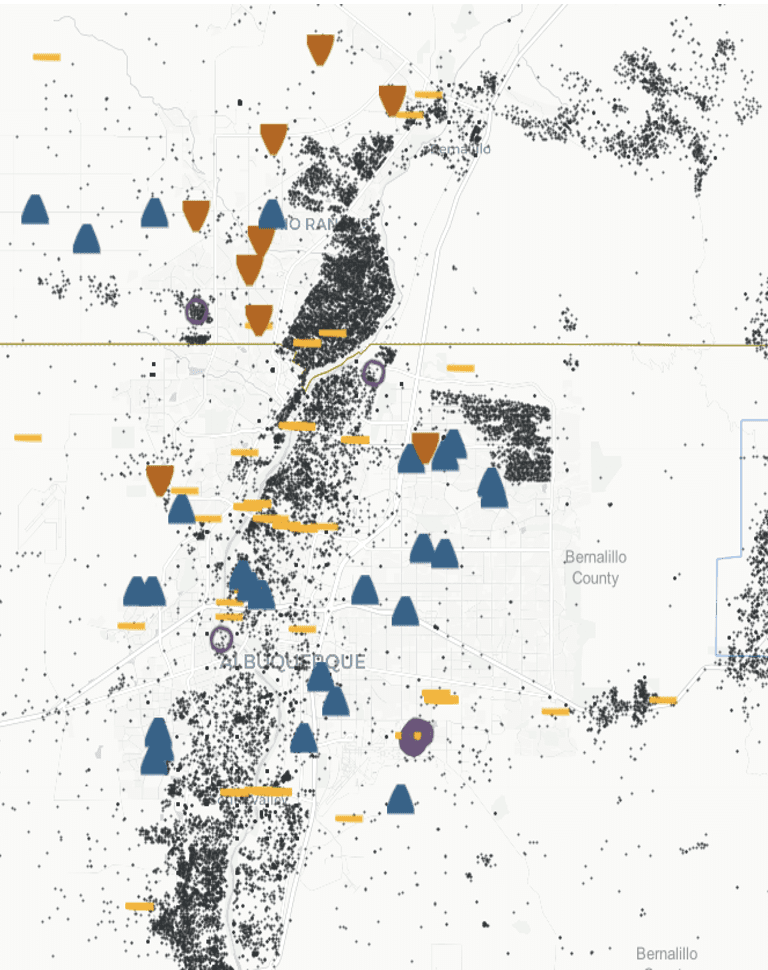
It is important to emphasize that surface water commonly is connected to the underlying groundwater. The connection can be direct and strong or less direct but with a longer-term impact. As such, unregulated pumping of groundwater from an aquifer interconnected with a river reduces river flows. In addition, groundwater pumping creates empty space in the pores formerly filled with the extracted water. In some places and at some times the weight of overlying soil and whatever is on the surface causes compaction of the aquifer. This leads to the formation of sink holes and overall ground surface settling, called surface subsidence. Areas of northeastern Albuquerque, for example, are included among those potentially susceptible to future pumping induced subsidence.
Differences Between Western and Eastern Water Management
In contrast to practices in the western US, most eastern states mange water under the riparian doctrine. This doctrine allows water use by the owners of the land adjacent to the water. Riparian rights cannot lose their rights for non-use, as is possible for those under the prior appropriation doctrine. Some western landowners think they have rights to water flowing by their land or underneath it, but that legal luxury is not valid in the western US as water must flow past to downstream senior water right owners.
The Challenge of Managing Wet Water for Multiple Needs
It has been emphasized here that the water management system of prior appropriation used in NM and the West comes from the agrarian dominated economies of the late 1800s. Unfortunately for that system, about 150 years ago there was also an “Industrial Revolution” that, like COVID, started to significantly spread across the world, changing the population size and economic base of many communities. Yet, across most of the West water is still managed as being an agrarian water-rights dominated economy, those having water rights from 100+ years ago get water first. But today NM needs to manage wet water from its various sources to deliver water for multiple user needs.
Of note here, a State water expert recently and perhaps surprisingly commented privately, “NM has plenty of water,” then, added, “it just goes to agriculture.” In fact, the ISC “Water in New Mexico” handout shows that 76 percent of the state’s water is diverted or pumped for irrigated agriculture. That, coupled with NM’s historical water-rights base management system is, perhaps, our state’s main obstruction to wet water management for today’s changing water supplies and population needs under climate warming.
The Need for Modern Water Management Approaches
NM’s water management approach needs to be updated for modern climate-warming times. NM must start managing physical wet water rather than focus almost entirely on administration of paper water, that is water rights and groundwater pumping permits. In the end, municipal populations and economies, family food farms, home food gardens, and, certainly, Hatch chile farms need water. If economic municipal economic growth is going to continue then wet water management needs to prevail over water rights management. If that is to happen, remaining family-owned senior, land grant, and tribal water rights will require special consideration. Likely too, in the long-term, some or many junior water rights holders may require significant shorting or eliminating.
Conclusion: Wet Water Management for the Future
Until NM changes to an emphasis on managing wet water over paper water, we may be left with two extreme inconvenient choices in the years to come: (1) some or most years with considerably less or zero water for domestic, municipal, industrial, and agricultural uses, particularly for those agricultural users with newer, post-1907 water rights; or (2) an increasingly dry or even desertified municipal and industrial economies with increasing urban abandonment.
Additional reading:
Active Water Resources Management. P. Bossert and G.C. Ridgley. 2013. Utton Center, University of New Mexico. https://uttoncenter.unm.edu/resources/research-resources/active-water-resource-mgmt.pdf
Land subsidence and recovery in the Albuquerque Basin, New Mexico, 1993–2014. Driscoll, J.M., and Brandt, J.T., 2017,: U.S. Geological Survey Scientific Investigations Report 2017–5057, 31 p.https://doi.org/10.3133/sir20175057
MainStream New Mexico. https://mainstreamnm.org/data-and-reports/ (This site provides links to many reports produced by various state organization on the state’s upcoming water crisis.)
Ogallala Aquifer Depletion Threatening Rural Communities & Ag. Ryan Hanrahan. 2024. Farm Policy News Summary. https://farmpolicynews.illinois.edu/2024/01/ogallala-aquifer-depletion-threatening-rural-communities-ag/
The Ogallala Aquifer: Saving a Vital U.S. Water Source. Jane Braxton Little. March 2009. Scientific American. https://www.scientificamerican.com/article/the-ogallala-aquifer/
The Upper Rio Grande – A Guide to Decision Making. S.J. Shupe and J. Folk-Williams. 1988. Western Network. (This report is difficult to find but provides considerable insight on the region’s water histories plus planning and management needs. This organization has produced other similar reports for water resources across the West.)


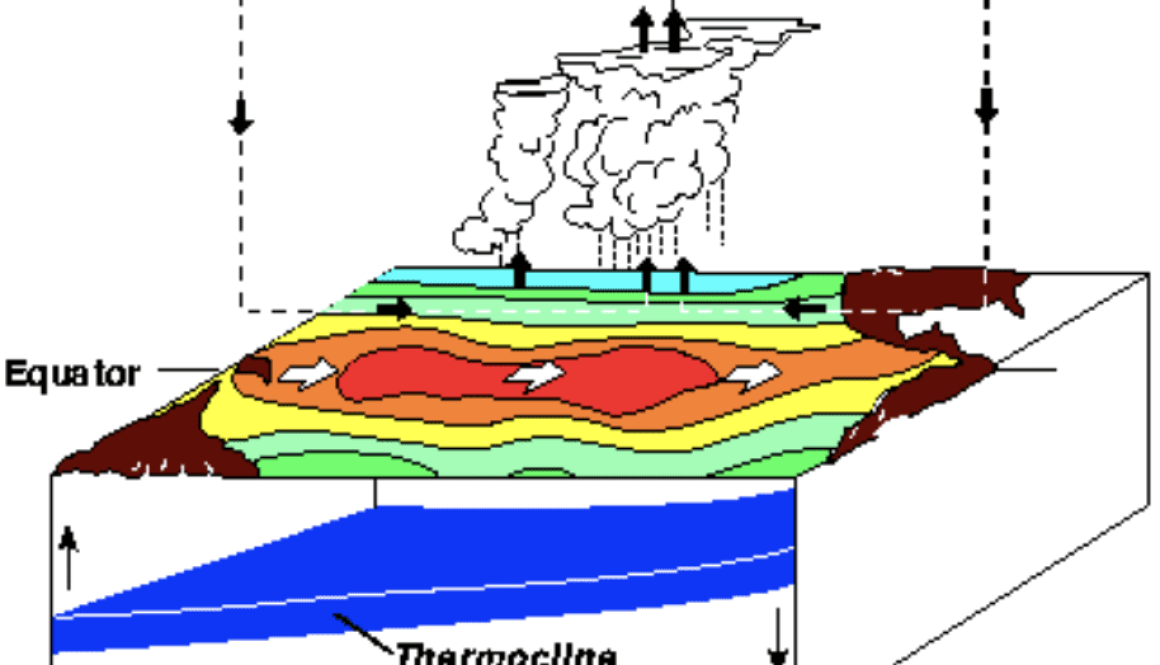
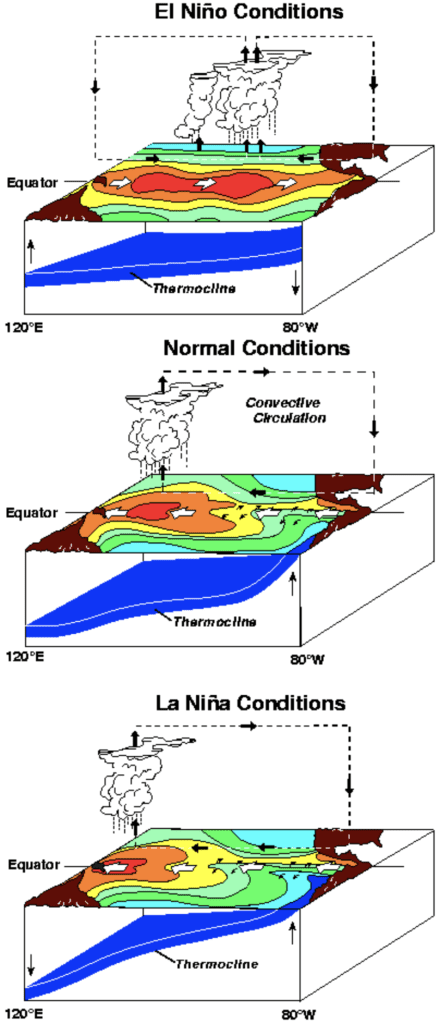 La Niña is the term for that part of a repeating cycle of cooling and warming of ocean waters in the east-central tropical Pacific that repeats every few years. La Niña patterns occur when the water is coolest, alternating with El Niño patterns that develop in the warmest years of this cycle. Historically, the global climate changes caused by La Niña conditions typically include reductions in rainfall across the Southwest during its traditional summer monsoon season. An El Niño can increase later summer and fall monsoons for the Southwest. Of major significance, an El Niño generally leads to significantly greater snow packs in the southern Rockies. Such changes also accompany increasing drought conditions for the northern Rockies and much of the Northwest, Midwest, and East.


 Vaillant’s story continues with NASA’s James Hansen presenting his 1988 testimony to Congress. Hansen plainly stated that climate change poses a clear and present danger to the planet and humanity. His conclusions were based on a hundred years of study and hundreds of recent publications. Subsequently, the term “global warming” appeared for the first time in a New York Times headline. The Intergovernmental Panel on Climate Change (IPCC) was created to coordinate international research and conclusions.